Meta / Contents
My New Commute: From the Office to the Kitchen
After thirteen years of working from home, I discovered that the transition from work to family doesn't happen on its own. My commute is gone, but I found something better to take its place.
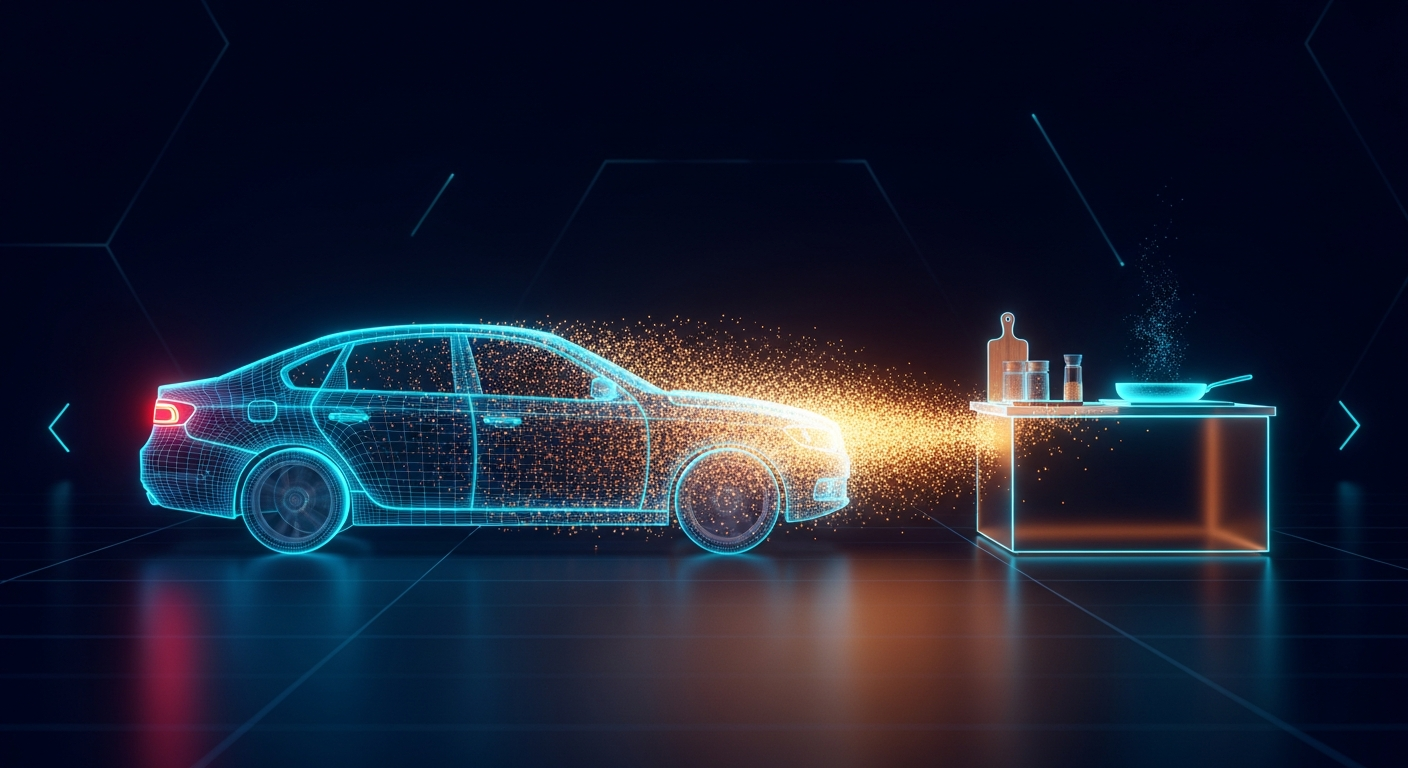
For years, I commuted two to three hours a day. I lived in the Midwest, worked far from home, and spent my mornings and evenings behind the wheel watching taillights crawl. There were days I didn't see my kids at all. My wife would take them to daycare early in the morning, and by the time I pulled into the driveway, they were already asleep. Three little ones—and some days, the only evidence they existed was the trail of toys across the living room floor.
That was the deal. You work, you commute, you hope the weekends make up for it.
Thirteen years ago, that changed. I started working from home full-time. No more highway. No more missed bedtimes. No more watching my kids grow up through stories my wife told me at the end of the day.
I got to be there. For homework and school pickups. For the random Tuesday afternoon conversations that you never plan but always remember. For the moments that don't fit neatly into a weekend schedule. My kids are now teenagers—and I get to actually watch them become who they are in real-time. That's time I would have spent on I-94, and I wouldn't trade it for anything.
The Problem Nobody Warns You About
But here's the thing nobody tells you about working remotely: the commute was doing something for you that you didn't realize.
It wasn't the traffic or the podcast queue or the drive-through coffee. It was the transition. That built-in buffer between "work brain" and "home brain." The commute gave your mind permission to shift gears. By the time you walked through the front door, you'd already started letting go of whatever was on your screen an hour ago.
When your office is twenty steps from your living room, that transition doesn't exist. You close the laptop at 5:30 and your brain is still refactoring code at 6:15. You're sitting at the dinner table mentally debugging an API call. You're physically home but mentally still at work.
I spent years in that mode before I even recognized it was happening.
Dinner Changed Everything
The fix, it turns out, was already waiting for me in the kitchen.
At some point—I honestly can't pinpoint when—I started cooking dinner most nights. Not anything fancy. We're an Aldi family. It's a rotation of meals everyone likes: homemade alfredo, chicken parm, chicken sandwiches, fish tacos on a good night. Simple stuff. The kind of meals where you already know the recipe and your hands just do the work.
And that's exactly why it works.
Cooking became my commute. The act of pulling out the cutting board, heating up the pan, and focusing on something completely unrelated to a screen—it gives my brain the reset it needs. There's no Jira ticket for dicing an onion. No pull request for a pot of pasta water. It's just me, the kitchen, and the simple goal of feeding my family.
By the time dinner hits the table, I'm home. Not just physically—mentally. The work thoughts have faded into the background, replaced by the smell of garlic and the sound of my kids wandering into the kitchen asking what's for dinner.
It's Not About the Food
Let me be clear—this isn't a cooking blog. I'm not plating anything that belongs on Instagram. Some nights it's fish tacos with all the fixings. Other nights I punt and order DoorDash or hit up McDelivery. No guilt about that either.
The point isn't the meal. It's the act. It's doing something with your hands that serves the people you love. It's a small, daily ritual that says: work is done, and I'm here now.
That's all the commute ever really was—a ritual that marked the boundary between two parts of your life. When you eliminate the commute, you have to build that boundary yourself. And it doesn't have to be complicated. It just has to be intentional.
Thirteen Years of Being Present
Looking back, the last thirteen years of remote work gave me something I can never get back from the commuting years: presence. I was there for first days of school and last days of school. For the teenage years that everyone warns you about but nobody tells you are actually kind of amazing. For the slow, ordinary Tuesday evenings that quietly become the memories your kids carry with them.
My oldest is 18 now and in college. The twins are 15. They're becoming their own people, and I got a front-row seat for the whole thing. Not from behind a windshield. From the next room over.
And now, from behind the stove.
Find Your Commute
If you work from home and you're struggling to disconnect—if you find yourself answering Slack messages during dinner or thinking about tomorrow's standup while your kids are talking to you—my advice is simple: find your commute.
It doesn't have to be cooking. It could be a walk around the block. A workout. Thirty minutes in the garden. Whatever it is, make it something that uses your hands or your body, something that pulls your attention into the physical world and away from the screen.
The transition matters. You just have to build it on purpose.
For me, it's a cutting board, a hot pan, and a house that smells like dinner by the time we sit down together.
That's a commute I'll never complain about.
–Jeremy